

"Baba Tandja" looms over the MNSD-Nassara leadership.
No end is yet in sight for the Nigerien political crisis, begun when President Tandja Mamadou, facing the end of his term-limited mandate on 22 December, decided to scrap the constitution of the 5th Republic, and grant himself three years grace period in which to create a 6th Republic. The alienation of most of the political class was expected, but the severity of ECOWAS rhetoric was likely not. Niger’s rulers would have expected this to be wrapped up by now, with the previous legal deadline for a new president to pass with a shrug. But the personal interest of current ECOWAS chair Nigeria — Niger’s massive neighbor and largest African trade partner — has meant that President Tandja has been excluded from the body, branded as a coup leader, and placed alongside Capt. Moussa Dadis Camara as a poster child for what’s wrong with West African governance.
And while Blaise Compaore, assigned mediation duties in Guinea, seems intent on finding a way for Dadis to stay in power despite his wholesale slaughter of his own people, Yar’Adua’s government has kept an unusual concentration of pressure on Niamey. [see Niger:Piling on the Pressure for details] Sadly, this has far exceeded any pressure the remarkably unified internal opposition has been able to bring to bear internally.
Should effective ECOWAS pressure escalate as they promise, seconded by sanctions by crucial donors like France, the EU, and the US, Niger’s new 6th Republic can’t carry on indefinitely. Current Chinese projects don’t fill the gap with direct payments. While uranium and oil revenue continue to flood in, too much of that has gone to support a small group of businessmen around Tandja to enable the government to balance the budget with it. Wages will not be paid, loans will not be forthcoming, the military will miss their trips to Fréjus, and there will be trouble.
But if Tandja is toppled or forced to give way in this manner, it will be an inside job by the political and military leadership who aided his new constitutional order.
—
Niger has had a lot of constitutions, and they tend to be none too creative rehashes of previous documents. The 6th was generated in less than a week, and declared “in effect” within days of the August referendum. It recycles much of the 5th Republic (semi-presidential 1999), with elements of the failed 4th Republic (General Baré Maïnassara’s strong presidency and ceremonial legislature). To give you a feel for the slapdash nature of current Nigerien jurisprudence, the constitution calls for a strong presidency which appoints all ministers — including the PM — and most of the judiciary and “independent” governing bodies. In most every public power carried over from the last constitution, there is simply a clause added which gives either the President or a body he appoints the power to suspend or override its function “when needed”. For new bodies, their description is invariably followed by something like “..whose functions and composition will be determined by law.” Later.
The “new” Legislature includes a National Assembly, whose law-making functions can be largely replaced by the President and his Council of Ministers. Their primary task, the annual budget legislation, must also be passed by a new second house, the Senate, which has not yet been created. The constitution says that the President will appoint a third of this Senate’s members, while bodies such a the council of Chieftancies and other government commissions will “indirectly elect” the remainder. I have yet to find any serious discussion of this body in the government’s daily mouthpiece, Le Sahel, let alone a schedule for it’s appearance.
The Nigerien National Assembly has historically sat in two short sessions each year. The first Hemicycle of the new Assembly has just wrapped up, but its hard to see what they accomplished. Committee rules were written up by a group led by former Communications Minister and close Tandja loyalist Mohammad Ben Omar, former PM and current MNSD party chief Seyni Oumarou was named President of the Assembly, and heads of each of the minor parties was given an important sounding office. because of the opposition boycott, there is no opposition in the Assembly. A budget for 2010 was announced in the President’s Council of Ministers and adopted by the National Assembly, calling for an increase in direct budget supports from foreign donors, which the government relies upon to pay the bills. That these will soon be cut by many donors seems to have eluded normally erudite Finance Minister Zeine. The leadership then wrapped up by chartering a junket to Angola for the 18th Joint Parliamentary Assembly of Africa, Caribbean and Pacific plus European Union (ACP/EU). All interested members were offered a large stipend to fly down and look like a real parliament. At least one member reportedly took the stipend but chose to stay in Niamey. And then the gavel fell of the first Assembly session of Niger’s 6th Republic.
And while the domestic and foreign press is rife with speculation, there seems little movement to resolve the crisis. The opposition, including two former Prime Ministers, one former President, and a large split from Tandja’s ruling MNSD, vows to eject the current President from power, and mark the 22nd with a final repudiation of his holding any legal office. Expect demonstrations and some violence in major cities.

Violence has flared in Niamey in August (bottom) and September (top).
Niger is an overwhelmingly rural society, in which the vast majority of the population do not participate in politics, intent as they are with meager rain-fed substance agriculture in the strip of Sahel along the south and west of the nation. The time leading up to harvest, taking place now or in the last month, is “the hungry season” in which rural people work much and eat little. Even many urban Nigeriens return to farms to help with the crop and pad their food supply. Rains in some areas of the west stopped for a crucial period in June this year, causing farmers there to replant, and millet crops to be less than expected. As if that were not preoccupation enough, the time after Tabaski and harvest begins the “exodé” when as many as a third of rural men (and a few women) travel as far afield as Ghana, coastal Nigeria, Benin or Côte d’Ivoire to work odd jobs, coming home in several months with clothes, supplies, and a little cash. Short of ECOWAS closing the borders, Nigeriens are unlikely to be roused to large scale political action in the next few months.
ECOWAS negotiator Abdulsalami Abubakar, the former Nigerian general and interim president who led his nation out of military rule, has continued his negotiations with opposition and government, demanding a directly negotiated solution between the parties. Nigerien PM Ali Badjo Gamatié, jetting from one West African capital to another has recently acceded — in theory — to such negotiations. Several recent opposition press stories have postulated that Gamatié

A recent cover of the state paper, Le Sahel, focuses on the PM's meetings abroad, and the business as usual at home.
is eager to split off the hard core Tazarché (pro-Tandja) forces who have become a political force parallel to the ruling MNSD. The Assembly elections of October were already read as such a movement, with the return of MNSD apparatchiks at the expense of an influx of “independent” business men close to the president and his sons. Yet Gamatié is technically himself an Independent, not a MNSD minister, and brought in for that reason.
The rumored “solution” to this crisis, the creation of a 7th Republic with Tandja as a figure head and his bête noire former ally Hama Amadou as head of a transitional authority, remains just rumor. The re-assertion of the old line MNSD over the pure Tazarchistes may make the political bloodletting easier to take, but many powerful men have publicly hitched their stars to the 6th Republic and the President himself.
Creeping personalization of rule is after all par for the course in such regimes, but a sudden and unexpected transition from one government to another is not a new phenomena in Niger. The genius of the Nigerien political class is, arguably, their ability to not only change political sides, but to successfully hit the “reset button” after dramatic change. Very few of the high ranking members of Ibrahim Baré Maïnassara’s 4th Republic saw their political careers — or access to the state — end following his death at the hands of his own former coup leaders in April 1999.
Tandja, whose government has been supported from the outset by the group of officers surrounding Chief of Staff General Moumouni Boureima, has since 2004 relied on the unwavering support of the RDP-Jama’a, Baré Maïnassara’s old party. Their only identifiable founding principle is the rollback of the 1999 immunity against those who carried out the April coup, including Moumouni Boureima. It’s current leader, Hamid Algabid flew to Abudja in November to plead with ECOWAS to support Tandja’s new regime. Still, the constitution of the 6th Republic maintains a blanket immunity for officers like Boureima.
Algabid is a good illustration of how reinvention is easy for the Nigerien elite. A Tuareg from Tanout, Algabid rose to the office of Secretary General of Finance in
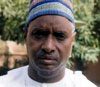
Hamid Algabid
Hamani Diori’s First Republic. When Seyni Kountché led a coup in 1974 and imposed almost a decade of extra-constitutional government, Algabid flourished, being appointed to several international posts and becoming Minister of Finance. When a token civilian government was named in 1983, Algabid became its second Prime Minister. When the gray formless General Ali Saïbou succeeded to power on Kountché’s death, Algabid served him for a year, before being kicked up to head the Organisation of the Islamic Conference throughout both the authoritarian Second Republic and the post-revolutionary Third Republic. When Baré Maïnassara took power, Algabid failed in a bid to become Secretary General of the UN (!), and agreed instead to head the General-President’s new party, made up almost entirely of defectors from the boycotting civilian parties. After 1999, Algabid led RDP-Jama’a into a coalition with the social democratic PNDS (a leader in the opposition to Baré Maïnassara, and now Tandja) before changing their minds in 2004 and supporting the president.
So while a few diehards newly lifted to great heights will fall should Tandja go, most of the political class will just change seats. Look for that jockeying with an eye to a post-Tandja future at every meeting of Nigerien officials with ECOWAS. The final key is where it always was, with Moumouni Boureima and a group of several officers who are all veterans of the 1999 CRN coup government. [more on them in a forthcoming article] Jeune Afrique’s recent report of coup talk amongst some younger officers strikes at the very foundations of Tandja’s continued rule.
Even if nothing comes of that, the moment a 7th Republic looks more likely to those currently in government than the stumbling on of the 6th, Tandja will be carried out on his throne. Pressure is important, then, but unless either ECOWAS or the opposition exhibit to heretofore unseen ability to generate outside force or popular unrest, Tandja will exit thanks to an inside job.
